 Ahmedabad, Gujarat
-
 ridham@brightreachintl.com
-
 06351869217
Ahmedabad, Gujaratridham@brightreachintl.com06351869217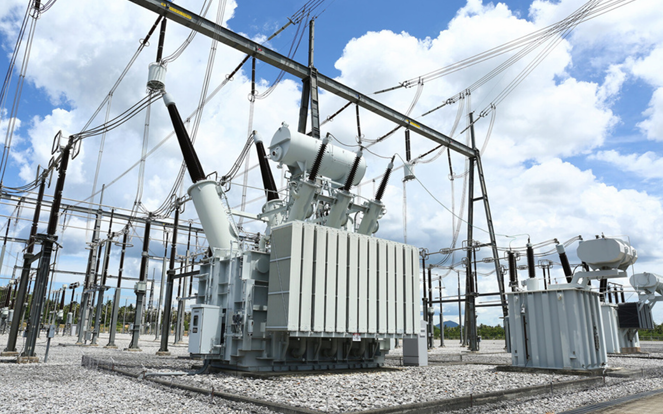
We are an Approved Manufacturer of ISI-approved on-load Distribution Transformer starting from 200 KVA to 5000 kVA Power Transformer ranges from 3MVA to 50 MVA of 132kV voltage class.
Quality is central to the performance & longevity of a transformer.
At Sempra Electric, the focus on quality begin with identification of
Raw Materials , Regular Inspection, Testing and validation before it
taken to the production
To create an excellent environment for production such
as dust free winding chambers, systematic core assembly
process , indigenously developed and designed autoclaving
process to ensure the creation of superior transformer which can measure
up to the most rigid inspection checks and tests on sustainable basis.
• Rated Power (kVA/MVA): Specify the transformer's capacity, typically
ranging from a few kVA for distribution transformers to several hundred MVA
for power transformers.
• Primary Voltage (HV) and Secondary Voltage (LV): Define the
input and output voltage ratings, including common combinations like 11kV/0.4kV or 33kV/11kV.
• Frequency: State whether the transformer is designed for 50Hz or 60Hz systems.
• Phases: Indicate whether the transformer is single-phase or three-phase.
• Connection/Vector Group: Specify the winding connection (e.g., Delta-star, Dyn11).
• Cooling Type: Describe the cooling method used, such as ONAN
(Oil Natural Air Natural), ONAF (Oil Natural Air Forced), or Dry Type.
• Impedance (%): Provide the impedance voltage, as this affects the
transformer's ability to handle short-circuit currents and voltage regulation.
• Insulation Class & BIL (Basic Insulation Level): State the insulation
class (e.g., A, B, F, H) which indicates the maximum operating temperature,
and the BIL, representing the impulse voltage withstand capability.
• Standards: Specify the relevant national or international standards
the transformer complies with (e.g., IS, IEC, ANSI).
• Core Material: Identify the type of core material
used (e.g., Cold Rolled Grain Oriented (CRGO) steel).
Specific product pages
• Rated Power (kVA/MVA): Highlight the specific capacity of the transformer being displayed.
• Voltage Ratio: Clearly state the exact primary and secondary voltage ratings.
• Tap Changer (Type and Range): Specify whether it's an off-circuit or
on-load tap changer, along with the tapping range and steps (e.g., ±2.5% in 1.25% steps).
• Losses: Provide guaranteed maximum no-load (iron) and load (copper)
losses at rated voltage and frequency, as per standards like IS: 2026.
• Efficiency: Specify the efficiency of the transformer at various load conditions.
• Overload Capacity: Indicate the permissible overload capacity and duration.
• Short-Circuit Withstand Capability: State the transformer's ability
to withstand short circuits, including the duration (e.g., 2 seconds, 3 seconds).
• Temperature Rise Limits: Provide the permissible temperature rise
limits for the windings and top oil.
• Dimensions & Weight: Include the physical dimensions and weight
of the transformer for logistics and installation planning.
• Noise Level: Provide the noise level in decibels at a specified
distance from the transformer, as per NEMA TR1 standards.
• Protection Devices: List the included protection devices like
overload protection, short circuit protection, Buchholz relay, or winding temperature indicators (WTI).
• Winding Material: Specify whether the windings are made of copper or aluminum.
If you are looking for anything specific you can write us below